
Learn Stock Trading - Finrise
Deep Flow AppsEducation
4.898.00 Reviews
- Version
- 1.2.1
- Installs
- 100.00K
- Age Rating
- Everyone
Screenshots

Our Review of Learn Stock Trading - Finrise
 Analysis by Appyee
I spent time with Learn Stock Trading - Finrise as an education app built around simulated market practice, and my first impression was clear: it is aimed at people who want to understand investing by making decisions, not just reading definitions. The idea is useful because stock-market concepts often feel abstract until you have to choose an entry, think about risk, and live with the result of a trade.
Finrise is developed by Deep Flow Apps and sits in the Education category. It is free to install, with optional in-app purchases ranging from $6.99 to $59.99 per item. That distinction matters. You can try the basic experience without paying, but the app is not simply a completely free course with every lesson or tool guaranteed to be open from the start. I would treat the free access as a way to decide whether its simulation style suits you before considering any purchase.
Learning by making market decisions
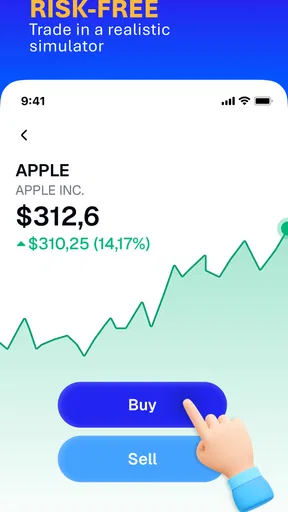
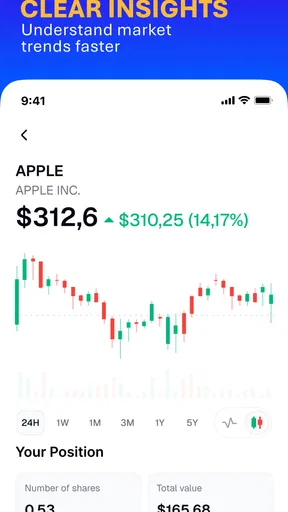
The central appeal is the realistic market simulation. Instead of treating investing as a list of terms to memorize, Finrise gives the learning process a practical shape: observe a market situation, decide what you would do, and examine the consequences inside a controlled environment. That makes it more approachable than jumping straight into a brokerage account, where a beginner can confuse a fast result with a good investing decision.
I especially like this format for someone who has watched videos about stocks but still feels unsure when faced with an actual chart or trading choice. Reading about diversification is easy; deciding how much confidence to place in one idea is harder. A simulation creates room to notice that difference without putting real savings at immediate risk.
That safety should not be misunderstood. Practice trading can teach decision-making habits, but it cannot reproduce every emotional and financial pressure of using real money. A simulated win may encourage overconfidence, while a simulated loss may feel easier to accept than a genuine one. I would use Finrise as a training space, not as proof that I am ready to trade independently.
What the free starting point tells you
The cost structure is relatively easy to understand at a high level: the app itself is free, while optional purchases are available. The important question for a new user is not only whether installation costs anything, but whether the accessible material is enough to judge the app properly. In my view, the best approach is to explore the free portion slowly rather than buying immediately because the subject sounds appealing.
There is also a practical reason to delay payment. The usefulness of a stock simulator depends heavily on how you learn. If you prefer guided explanations, Finrise may feel engaging. If you want a detailed reference library, formal lessons, or professional research tools, a dedicated course or finance platform may fit better. Paying makes sense only after you know that the app’s learning rhythm works for you.
The listed purchase range runs from $6.99 to $59.99 per item, so the difference between a small optional upgrade and the most expensive listed purchase is substantial. I would compare the price of any specific item with the amount of content or access it actually unlocks before deciding. Since the app is free to begin with, there is no need to make that decision on the first visit.
Where the simulation is most useful
Finrise is strongest when I use it to rehearse a process rather than chase a result. For example, I can begin by writing down why I would consider a trade, what could invalidate that idea, and how much uncertainty I am willing to accept. After the simulated outcome, I can review whether the original reasoning was sound or whether I simply reacted to movement.
That workflow offers a more valuable lesson than memorizing a successful trade. A beginner can discover whether they tend to buy after a price has already risen, sell too quickly after a small decline, or change their plan whenever the market moves against them. Those tendencies are difficult to notice when learning only from articles.
Another useful habit is to separate the decision from the outcome. A profitable trade can still come from weak reasoning, and an unprofitable trade can follow a sensible plan. Finrise’s simulation format is well suited to practicing that distinction, provided I take notes instead of treating every result as a score.
A realistic everyday routine
Imagine someone with a full-time job who keeps hearing about investing but has never placed a trade. Rather than opening a brokerage account during a lunch break, that person could spend a short evening session in Finrise examining one simulated opportunity. They might record the reason for entering, the risk they noticed, and the point at which they would stop supporting the idea.
The next session could focus on reviewing the decision instead of immediately starting another one. That pause is important. Without it, a simulator can become a fast guessing game, and rapid decisions may reward impulsiveness rather than understanding. Used as a journal-like practice tool, the app can turn spare time into structured learning.
I would also recommend creating a simple rule before each session: make only one type of decision, such as evaluating an entry or reviewing an exit. This reduces the temptation to react to everything at once. It is a small adjustment, but it makes the simulation more educational because you can identify which part of the process caused confusion.
How it compares with familiar alternatives
Compared with reading a beginner’s investing book, Finrise is more interactive and less dependent on imagining how a market decision would feel. A book is usually better for building a broad foundation, learning terminology carefully, and returning to a concept later. Finrise is better when the problem is hesitation: you understand the words but do not know how to apply them.
Compared with watching finance videos, the app has a more active learning loop. Videos can explain a strategy clearly, but they also let viewers remain passive. A simulation asks for a response. On the other hand, video courses may provide more context, examples, and instructor explanation than a compact app experience.
Compared with a real brokerage account, Finrise is the safer place to rehearse. It avoids the immediate consequence of putting personal funds behind an untested idea. The trade-off is that simulated confidence can be misleading. Real investing includes emotional pressure, personal goals, taxes, account rules, and the possibility of permanent financial loss. I would not replace careful financial planning with practice results from this app.
Compared with a market-news or research app, Finrise serves a different purpose. Research tools help users investigate companies and current conditions; this app is more useful for practicing the act of making and reviewing decisions. Someone looking for live analysis, portfolio administration, or detailed company research should look elsewhere rather than expecting an education simulator to cover every finance need.
Specific strengths that reward patient use
The first non-obvious strength is that the simulation can expose behavior, not just knowledge. A user may already know that risk matters and still discover that they ignore risk when a trade looks exciting. That gap between what I say I believe and what I actually do is one of the most useful things a practice environment can reveal.
The second is the opportunity to test a personal checklist before real money is involved. I can ask the same questions every time: What is the reason for this decision? What would make it wrong? Am I acting because of a plan or because of a recent move? Repeating that checklist turns Finrise into a rehearsal space for discipline rather than a collection of isolated exercises.
The third is its value as a comparison tool for learning styles. I can try a more cautious approach in one practice period and a more active approach in another, then compare the quality of my reasoning. The useful result is not finding a magic strategy; it is learning which assumptions I understand and which ones I only repeat from other people.
A fourth insight is that beginners should use the app to identify questions for further study. If a simulated decision feels unclear, that uncertainty is a signal to investigate the underlying idea in a reliable educational source. The app works best as a bridge between theory and practice, not as the only authority a learner consults.
Limitations and points of friction
The simulation format can simplify the market in ways that matter. A clean practice decision may not capture the stress of a real account, the difficulty of following a plan during a sharp decline, or the personal consequences of losing money needed for everyday life. I would keep a clear boundary between educational practice and financial action.
There is also a risk of turning learning into entertainment. If I focus on winning simulated trades, I may start selecting decisions for excitement instead of studying risk. That is not a defect unique to Finrise, but the app’s interactive nature makes self-discipline important. The more enjoyable the practice becomes, the more deliberately I should review whether I am learning anything.
The optional purchase model may also create hesitation for users who want to know the full value before spending. Because the app is free to start but includes paid items, I would inspect each purchase carefully and avoid assuming that paying automatically makes the learning experience complete. The right value depends on what the individual item adds and how often I will use it.
Finrise is not the right choice for someone who wants personalized investment advice. It also should not be the first stop for a person searching for a complete financial plan covering savings, debt, retirement, and emergency funds. In those situations, a broader financial education resource or qualified professional guidance is more appropriate.
Who is likely to get the most value
I would recommend Finrise to a complete beginner who wants a low-pressure introduction to stock trading concepts. It is also a good fit for a learner who understands basic vocabulary but freezes when trying to turn that knowledge into a decision. The simulated setting gives both groups a way to practice without immediately exposing real savings.
Students and self-directed learners may appreciate the ability to repeat a decision process at their own pace. The app can also help someone prepare more thoughtful questions before taking a class or reading a longer investing guide. Its Everyone content rating makes it accessible to a broad audience, although accessibility does not remove the need for age-appropriate financial judgment.
I would be more cautious about recommending it to an experienced investor. A seasoned user may find the educational simulation too introductory unless they are specifically using it to teach someone else or examine their own decision habits. Likewise, people who need current market data, advanced analysis, or account management will probably get more practical value from specialized finance tools.
Performance expectations and basic details
The current version is 1.1.0, and it supports devices running Android 7.0 or later. Those details make it approachable for users who are not carrying a recent phone, though the experience will still depend on the device itself and the way the app presents its simulation. I would keep the app updated and give it enough uninterrupted attention to make the exercises meaningful rather than treating it as something to tap through quickly.
Finrise has an average rating of 4.6 from around one and a half thousand ratings, along with dozens of written reviews. It has also passed the fifty-thousand-install mark, which suggests that the concept has attracted a meaningful beginner audience. I see those figures as signs of interest, not guarantees that every learner will prefer the same teaching style.
My buy-or-skip verdict
My recommendation is to try the free experience first. The strongest value here is not simulated profit; it is learning how your own decisions behave under uncertainty. If the exercises help you slow down, explain your reasoning, and review mistakes without risking money, Finrise earns a place in a beginner’s learning routine.
I would consider an optional purchase only after using the free portion enough to identify a specific need. The listed purchase range means the paid side deserves a deliberate decision, especially for someone on a limited budget. Do not buy simply because you hope a paid item will turn practice into reliable trading success; no simulation can make that promise responsibly.
Skip it if you want live brokerage features, individualized advice, or a complete financial-planning service. Choose a book or structured course if you need deep explanations, and choose a research-focused finance app if your priority is analyzing real companies. But if you want an accessible way to rehearse stock-market decisions before committing real funds, I think Learn Stock Trading - Finrise is worth trying, with realistic expectations and a notebook beside you.
Privacy and Permissions
See what permissions an app requests and how it handles your data.
- Other
- view network connections, full network access, run at startup, control vibration, prevent device from sleeping, Google Play license check, read Google service configuration
Verdict
Strengths of Learn Stock Trading - Finrise
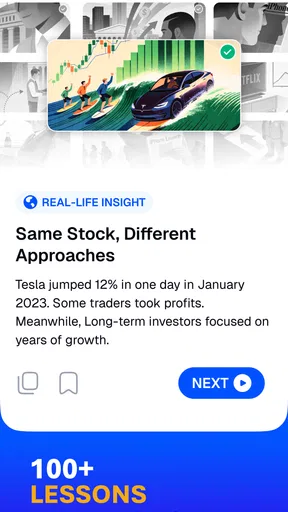
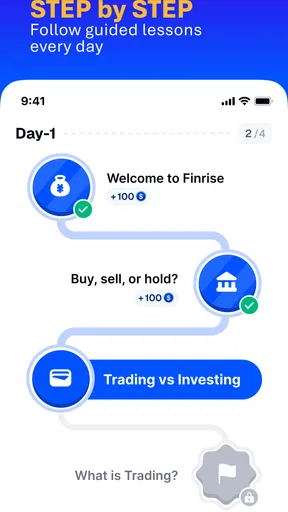
- Beginner-friendly lessons explain stock market basics in simple language.
- Short learning modules make it easy to study during spare moments.
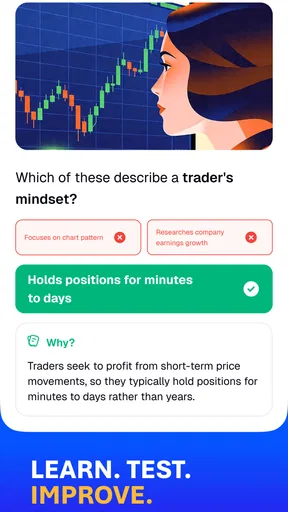
- Practice tools can help users build confidence before investing real money.
- Covers essential topics such as charts, risk, and portfolio management.
- Useful for creating a structured learning routine for new investors.
Limitations of Learn Stock Trading - Finrise
- Some advanced investing topics may feel too brief for experienced traders.
- Educational content cannot replace personalized financial advice.
- Market examples may not always reflect current prices or conditions.
- Full access to certain lessons or tools may require a subscription.
- Users still need a separate brokerage account to place real trades.
Other Releases by Deep Flow Apps
View All
Learn English, Spanish: Learna
Education4.6

IQ Masters - Brain Games
Education4.2

Nerd AI - Tutor & Math Helper
Education4.6

Retake AI: Face & Photo Editor
Photography3.7
Similar Picks in This Category
View All
Duolingo: Language Lessons
Duolingo4.7

Google Classroom
Google LLC2.8

Unacademy: Learn & Crack Exams
Unacademy3.2

Bible App for Kids
Life.Church4.4

Cake - Learn English & Korean
Cake Corp.4.7

Brainly: AI Homework Helper
Brainly4.5
Frequently Asked Questions
What is Learn Stock Trading - Finrise?
Learn Stock Trading - Finrise is an educational app designed to help beginners understand the basics of stock market investing and trading. It generally presents lessons, explanations, market terminology, and practical learning material in a mobile-friendly format. The app is intended to improve financial knowledge, not replace professional investment advice or guarantee profits from any particular stock or strategy.
Is Learn Stock Trading - Finrise suitable for complete beginners?
Yes, the app is mainly aimed at users who are starting to learn about stocks, trading, and investing. Its structured educational approach can help explain concepts such as market orders, charts, risk, diversification, and portfolio management in a more accessible way. However, beginners should still study independently and avoid investing real money until they understand the risks and can make informed decisions.
Can I trade stocks or invest real money through Finrise?
Learn Stock Trading - Finrise should be treated primarily as a learning and educational tool rather than a replacement for a regulated brokerage account. Educational apps may explain how trading works, but they do not necessarily execute stock orders or hold investments for users. Before downloading, check the current app description and permissions to confirm whether any simulations, broker integrations, or live-market features are included.
Does Learn Stock Trading - Finrise guarantee profitable trading results?
No stock market education app can honestly guarantee profits, and Finrise should not be viewed as a way to earn money automatically. Markets are unpredictable, and even well-researched trades can lose value. The app may help users build knowledge and recognize common strategies, but successful investing also requires discipline, risk management, current research, and an understanding that losses are always possible.
Is Learn Stock Trading - Finrise free to download and use?
The availability of free lessons and optional paid features can vary depending on the version of Learn Stock Trading - Finrise, the device platform, and the developer’s current pricing model. Some content may be accessible without payment, while advanced courses, tools, or subscriptions could require an in-app purchase. Review the store listing carefully for pricing, recurring billing, trial terms, and cancellation instructions before subscribing.
